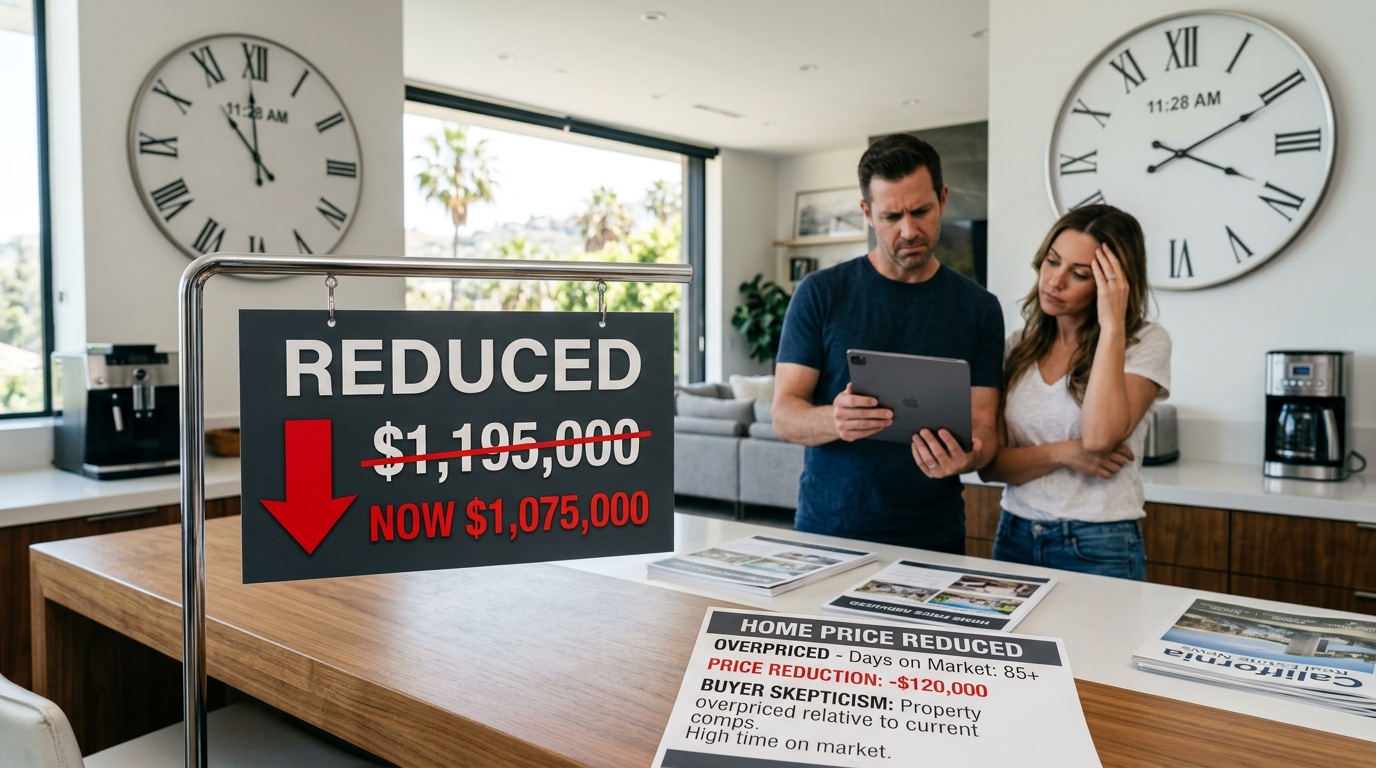
Remember 2021 and 2022? Gone are the days of aggressive bidding wars during the housing market frenzy of 2021 and 2022. Back then, homes were getting snatched up within hours, and sellers could practically name their price. The market was on fire, and it seemed like good times would never end. That feeding frenzy mentality still lingers in the minds of many sellers, but the reality of today's market is drastically different.
As a real estate agent serving Chino, California, I've watched this shift unfold firsthand. What worked in a scorching seller's market can be absolutely devastating in the balanced market we're navigating now. And the culprit behind many sellers' troubles? Overpricing.
The Market Has Shifted, But Old Habits Die Hard
The expectation that homes will sell quickly and above asking price is firmly lodged in many sellers' minds. Yet "We've gone from a market where sellers could price aggressively and still get above asking, to one where overpricing has real consequences," said Joel Berner, senior economist at Realtor.com. "Buyers have more leverage than they've had in years."
In Chino right now, properties sell after an average of 70 days on the market, which tells you everything you need to know about the pace of sales. This is a buyer's market, and buyers are acutely aware of their power. They're comparing listings, tracking price changes, and most importantly, they're walking away from homes that don't feel like good value.
What Happens When You Start Too High
Here's the brutal truth about overpricing in today's market: Overpricing your home can have damaging effects on the selling process, as it may deter potential buyers and prolong the time your property stays on the market.
"Today, an overpriced home doesn't just sit—it gets stale, loses leverage, and sells for less than it would have if it had been priced right from the start," Berner said. This is the paradox that catches so many sellers off guard. They think starting high gives them negotiating room, but the market doesn't work that way anymore.
When you overprice, the first 14 days are critical and you've already blown it. When a house goes on the market, the greatest potential to attract buyers is within the first 30 days. In a seller's market, the greatest potential to attract buyers is within a mere 7 days! Most serious buyers begin their search with carefully researched parameters. An overpriced listing simply won't show up in their search results.
The Cascade of Negative Consequences
Let's walk through what happens when a home sits on the market too long. A recent study shows that in 2025, 57% of homes that sold had at least one price cut. Homes that required a price cut stayed on the market five times longer than homes priced correctly from the start.
Beyond the extended timeline, there's a psychological component that works against sellers. The mechanics are unforgiving. Once a listing approaches 30 days without an offer, buyer psychology shifts. Shoppers begin asking: "What's wrong with it?" This stigma is real, and it's hard to shake once it takes hold.
Even if you eventually find a buyer willing to pay your asking price, there's another hurdle waiting. Even if you find a buyer willing to pay your inflated price, you might face another hurdle: the appraisal. Lenders require an appraisal to ensure the home's value supports the loan amount. If the appraisal comes in lower than the agreed-upon price, the buyer's lender may not approve the mortgage for the full amount. This can cause the deal to fall through or require you to reduce the price significantly, leading to frustration and delays.
The Price Reduction Paradox
Many sellers think they can outwait the market or hope that a price cut will suddenly attract buyers. But As days turn into weeks, and weeks into months, buyers start to wonder why. They might assume there's something wrong with the property, even if there isn't. This can lead to your home becoming "stale" on the market. When you eventually have to drop the price, it often signals to buyers that you're desperate to sell, giving them leverage to negotiate even lower.
When a home has multiple reductions, buyers sometimes start asking questions like: Was it overpriced from the beginning? Is something wrong with the house? Have previous buyers walked away? Are the sellers getting desperate?
The Numbers Don't Lie
Look at the data on how days on market impact final sale price. Homes that sold at the four-week mark closed 1.8 percentage points higher than the average home sold during that month. And sellers fared even better if their homes went into contract during the first two weeks on the market.
Conversely, Sellers who let their homes languish on the market are faring the worst. When homes sell 18 weeks after being listed, they close 1.3 percentage points below the monthly average.
In the Chino market specifically, homes that sell quickly are the ones getting the best prices. Emotional attachment to a number and unrealistic expectations about market conditions are luxuries sellers can no longer afford.
Why Sellers Overprice in the First Place
I understand the temptation. One of the primary reasons for overpricing is emotional pricing, where homeowners assign a value to their property based on personal experiences and memories. This emotional connection often leads to resistance in following an agent's pricing recommendations, resulting in a home being priced higher than the market can bear.
Some sellers also try to factor in the costs of selling—commissions, closing costs, repairs—and inflate the price to compensate. But Another common mistake is pricing based on need, such as a seller's desire to fund their next home or cover moving expenses. However, pricing a home above its market value to meet personal financial needs can backfire, as buyers are unlikely to pay more than what the home is worth.
What Smart Pricing Looks Like
Overpricing can cause your listing to sit for longer than expected. Homes priced right from the start tend to sell faster and for more, even in slower markets.
The best sellers I work with understand that pricing isn't about what they want to get. It's about what the market is willing to pay right now. The general rule: if you haven't received a serious offer within 14 to 21 days in a balanced or hot market, the price is the problem.
A comparative market analysis from a knowledgeable local agent is invaluable. I look at recent sales in your neighborhood, the current inventory, days on market for comparable homes, and buyer demand patterns. In Chino, that means understanding the nuances of different neighborhoods—what's selling in the $700,000s versus the $900,000s, and what the actual absorption rates tell us about buyer interest at each price point.
Your Competitive Window
Think of pricing as creating the right first impression. When a home is priced correctly, Well-priced homes will stand out in the market immediately. Serious buyers see it, agents show it, and momentum builds. This momentum creates competition among buyers, which paradoxically results in better offers and faster sales.
An overpriced home enters the market with a disadvantage it may never overcome. Even a well-timed price reduction can't fully recover from that initial misstep. The listing sits, people see it's stale, and the best buying window has closed.
My Role as Your Chino Real Estate Expert
This is where I come in. As your local real estate agent in Chino, I track the market constantly. I know which neighborhoods are moving fast, which price points are competitive, and what buyers in your area are actually paying. I use data from HOUSEJET and other market indicators to give you an accurate picture of your home's value.
When you're ready to sell, I'll provide you with a comprehensive market analysis that shows you exactly where your home sits in the current Chino market. We'll discuss strategy, timing, and realistic pricing that positions your home to sell quickly and for the best possible price.
The goal isn't to start high and hope. The goal is to price smart and sell strong. That's how we work together to make sure your home doesn't become another victim of the overpricing trap.
If you're thinking about selling your home in Chino, let's talk. I'd be happy to provide you with a no-obligation market analysis and show you exactly what your home is worth in today's market. Contact me through my website at salsalinashomes.housejet.com, and let's create a selling strategy that works.